Building the Embroidered Yoke
This jacket began with a reference: an embroidered panel worked into a denim jacket. I was interested in the relationship between the heavy decoration and the familiar structure of denim. I wanted to explore that relationship on my own jacket, while keeping the intervention focused.
The first job was deciding where the embroidery should sit. The jacket already had a clear structure: collar, front opening, shoulder seams, pockets and sleeves. The embroidered material had its own dense pattern and weight. I had to find a placement where those two structures could meet without the embroidery swallowing the jacket.
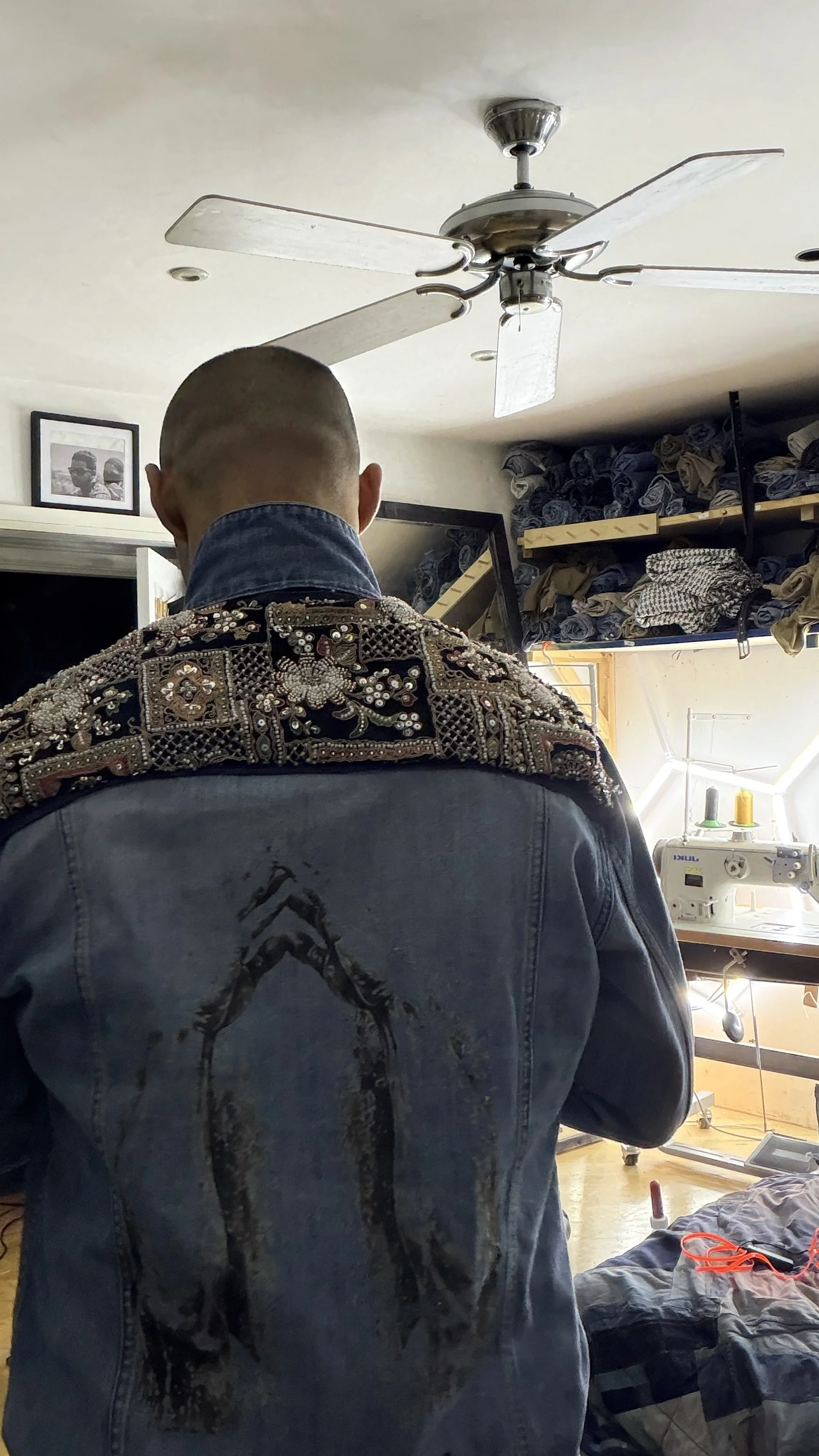
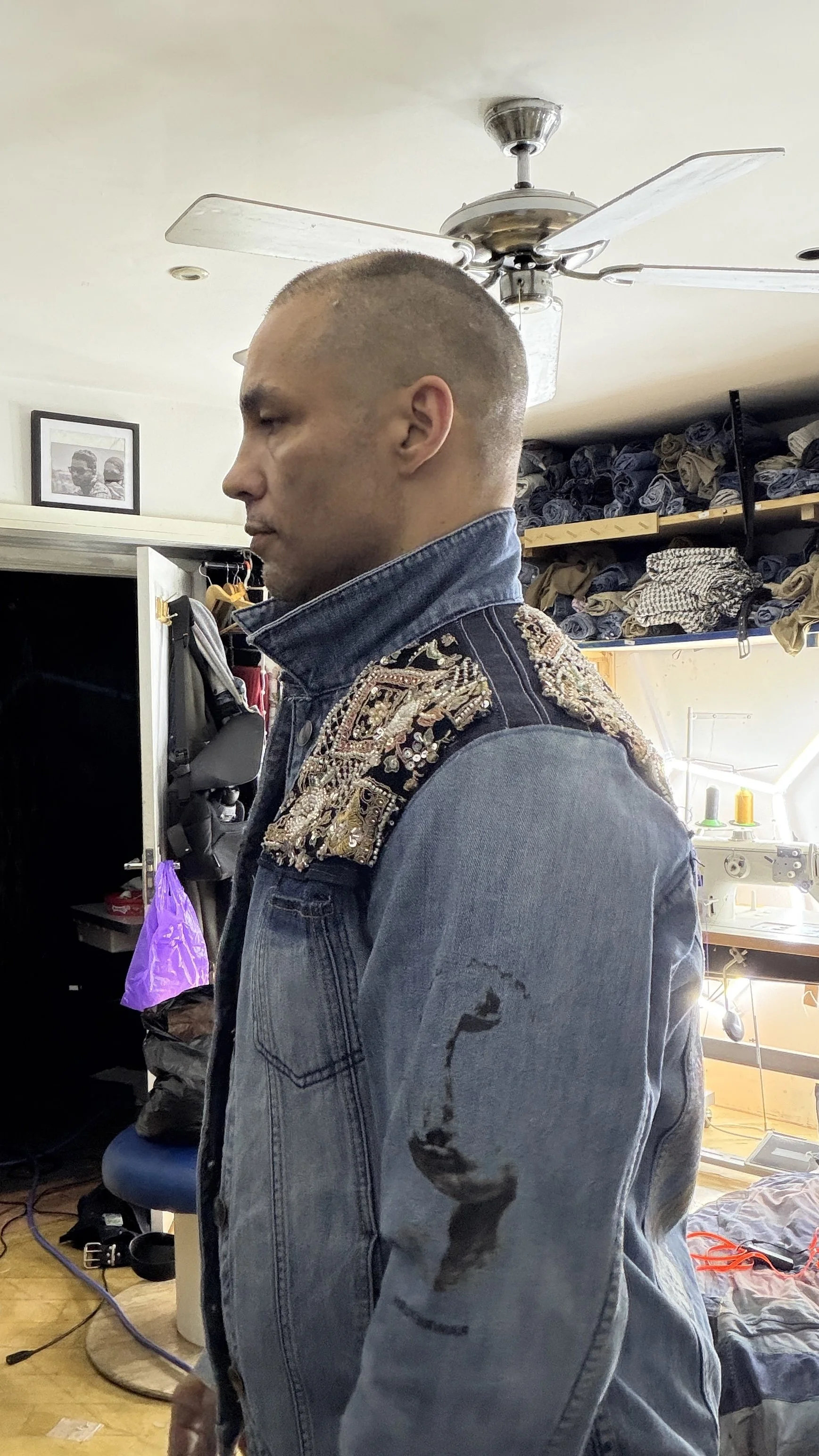
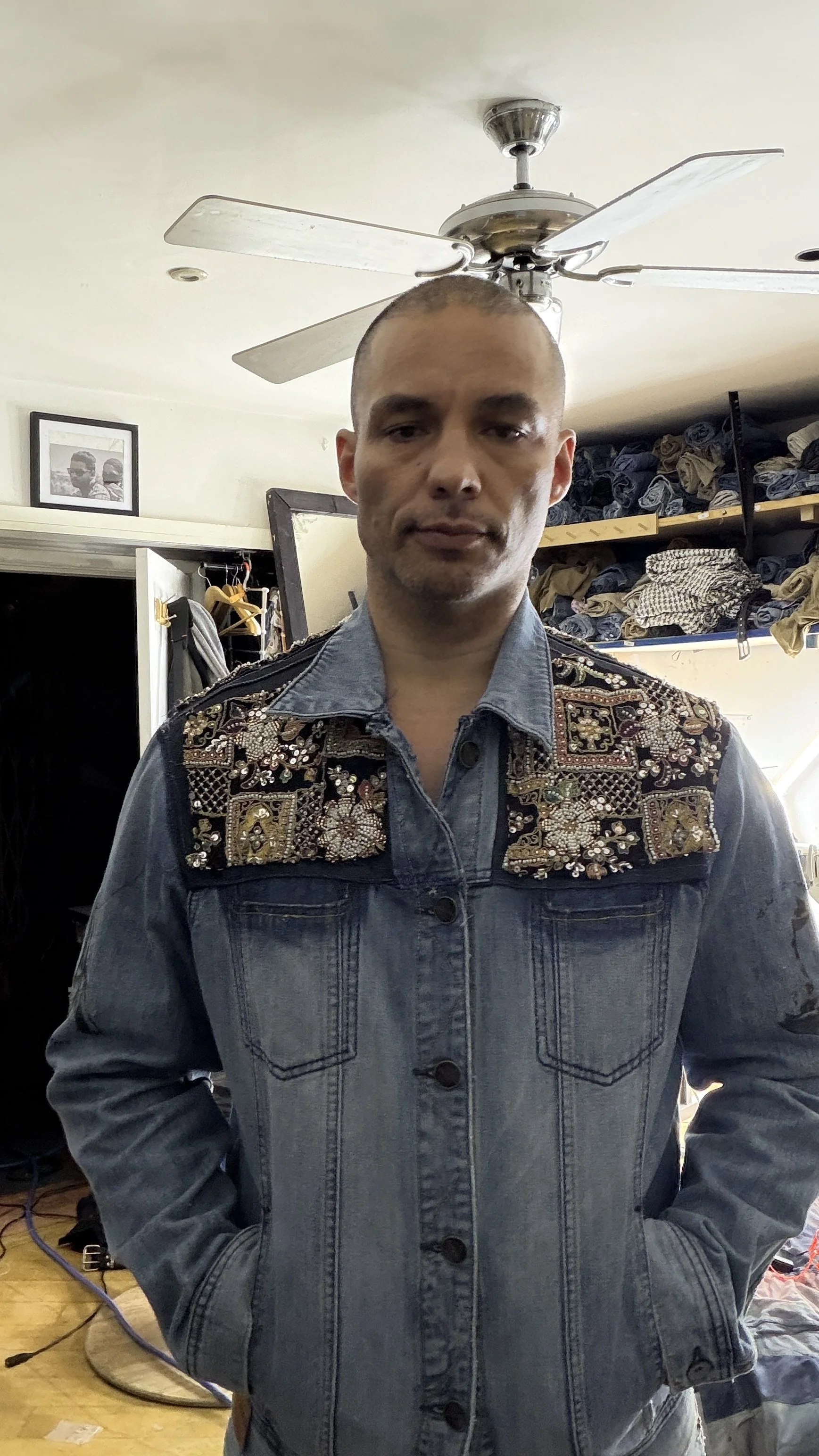
I worked the front as two panels, one on each side of the opening. Their shapes follow the shoulders and sit above the chest pockets. The centre opening and denim collar remain visible, giving the front a clear line through the embroidered area. I carried the treatment over the shoulders and across the upper back so the change could be read from more than one angle.
That took time at the bench. I kept checking the position against the jacket itself: how the panels sat beside the collar, how they related to the pockets, and how they continued over the shoulders. A placement that looked right lying flat also had to make sense when the jacket was worn. The side and back views helped me see whether the yoke felt connected around the body, rather than like separate pieces placed on the front.
I made a deliberate choice to keep the rest of the jacket. The original denim collar, sleeves, pockets and body stay in place. I didn’t redesign the whole garment or add more changes to compete with the embroidery. The work is concentrated at the yoke, where the donor material changes the jacket’s character while its original shape remains recognisable.
Trying it on was part of the construction process. The front view showed the relationship between the embroidered panels and the opening. The side view showed how the treatment crossed the shoulder. The back view showed the yoke as a larger, continuous area against the denim. Together, those views helped me judge the jacket as a worn garment, not only as a flat arrangement on the bench.
The finished piece brings two different material histories together: a denim jacket and an embroidered donor textile. I think of the process as donor-material migration through yoke reconstruction. The embroidery has moved into a new garment, but its placement follows the structure already there.
Three days of work led to one focused intervention. The jacket is complete, and the detail is allowed to carry the idea.